RODBUK Cracow Open Research Data Repository

RODBUK is co-created by six Cracow universities:
AGH University of Krakow, University of Physical Education, Cracow University of Technology, Krakow University of Economics, Jagiellonian University in Kraków, University of the National Education Commission. The technical implementation of the project is handled by the ACK Cyfronet AGH.
The purpose of RODBUK is to collect, develop, archive and make available in open access all types of research data created by researchers, PhD candidates and students in the course of scientific activity. RODBUK aims to implement the Open Science policy by creating a publicly available platform for depositing research datasets, enabling:
- getting acquainted with the research conducted in Cracow's scientific centres,
- storage of various types of research data,
- quick access to information through a user-friendly search interface,
- high quality of descriptive metadata,
- obtaining a permanent Digital Object Identifier (DOI) for each dataset,
- standardized data citation,
- choosing a data usage licence agreement (Creative Commons or other),
- setting embargoes and unlocking of restricted files.
RODBUK allows collecting and share open research data from various disciplines and in all file formats. Thanks to this, data is indexed and cited, which has a positive effect on its dissemination and promotion. RODBUK is compliant with the Open Access Infrastructure for Research in Europe (OpenAIRE) guidelines.
RODBUK applies the FAIR Principles, which means the data is: findable, accessible, interoperable, reusable.
RODBUK is registered in:
- re3data - an international registry of research data repositories,
- OpenDOAR - an international registry of open repositories,
- OpenAIRE - (Open Access Infrastructure for Research in Europe) It is a European infrastructure supporting open science, funded by the European Commission. It brings together scientific publications, research data, software, projects, and research institutions into a single ecosystem, increasing the visibility and accessibility of research results.
In this way, it meets the requirements set by research funding agencies like the National Science Center and the European Union for depositing and opening research data.
The Repository is dedicated to researchers from universities co-creating the project, but it is also open to external scientific units interested in depositing and sharing their research data.
RODBUK usage is free of charge.
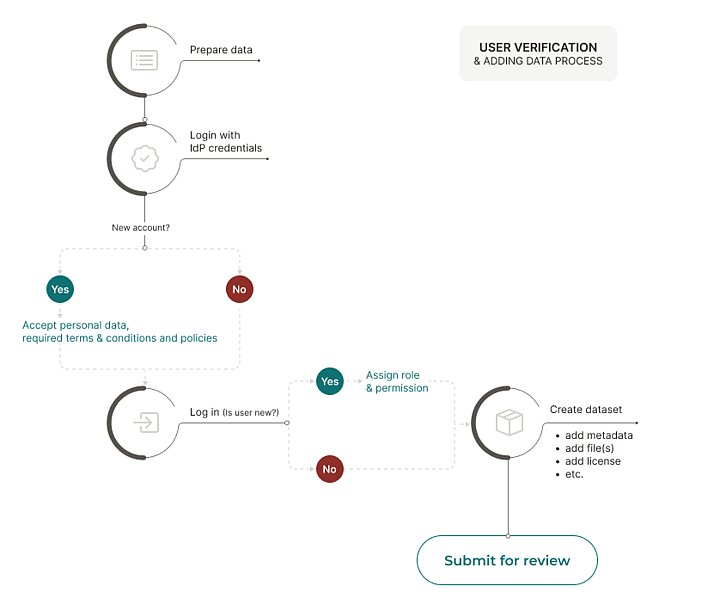
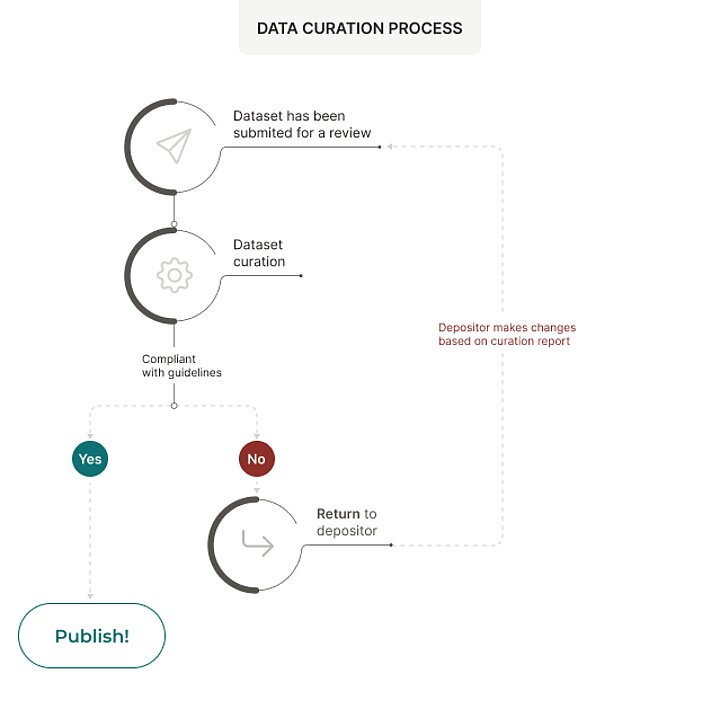
To deposit research data in RODBUK, you need to have an active account in the repository. Logging in is via the university's authentication system (email address in the agh.edu.pl domain). When logging in for the first time, you must verify the correctness of the data entered, read and accept the terms and conditions, and then confirm the creation of the account. After verifying and assigning permissions to the appropriate collection (faculty), you can deposit research data in RODBUK. Verification of the user account by the administrator takes a maximum of one working day. See the user guide for complete information on how RODBUK works.
Research data are usually made accessible in a form of datasets. This is a collection containing data connected to a single publication, scientific project, or experiment.
According to the guidelines of scientific funding bodies, research data should be saved in open formats (e.g. OpenDocument, PNG, FLAC, WebM, HTML, CSS) widely available and free of charge with one exception when the files conversion from specialised software to an open source may affect the data quality.
The dataset should also be supplemented by documentation containing all the information necessary to understand and properly interpret the data provided. A good practice is to add a README.txt file to the dataset, which contains basic information about the shared data.